Easements and Access Routes Kept Functional
Right-of-Way Clearing in Greenfield for utility corridors, road easements, and access routes overtaken by vegetation
Utility easements and access routes that disappear under unchecked growth create problems for service providers, limit your ability to move equipment, and may violate easement agreements requiring clear passage. The vegetation removal process involves cutting back brush and small trees that encroach on designated corridors, hauling or mulching debris, and restoring the sight lines that make rights-of-way usable. Iron Wolf Land Management works across Greenfield properties where spring maintenance cycles align with seasonal rain, which softens root systems but also creates access challenges on unpaved routes.
Right-of-way clearing focuses on maintaining the width specified in easement agreements, whether that's a utility corridor wide enough for bucket trucks or a property access lane that needs to stay passable year-round. Ground conditions during Central Indiana's wet springs affect timing, since equipment selection must match soil firmness to avoid rutting the route you're trying to preserve.
Arrange an on-site consultation to review easement boundaries and assess current vegetation encroachment.
How Right-of-Way Clearing Addresses Access Problems
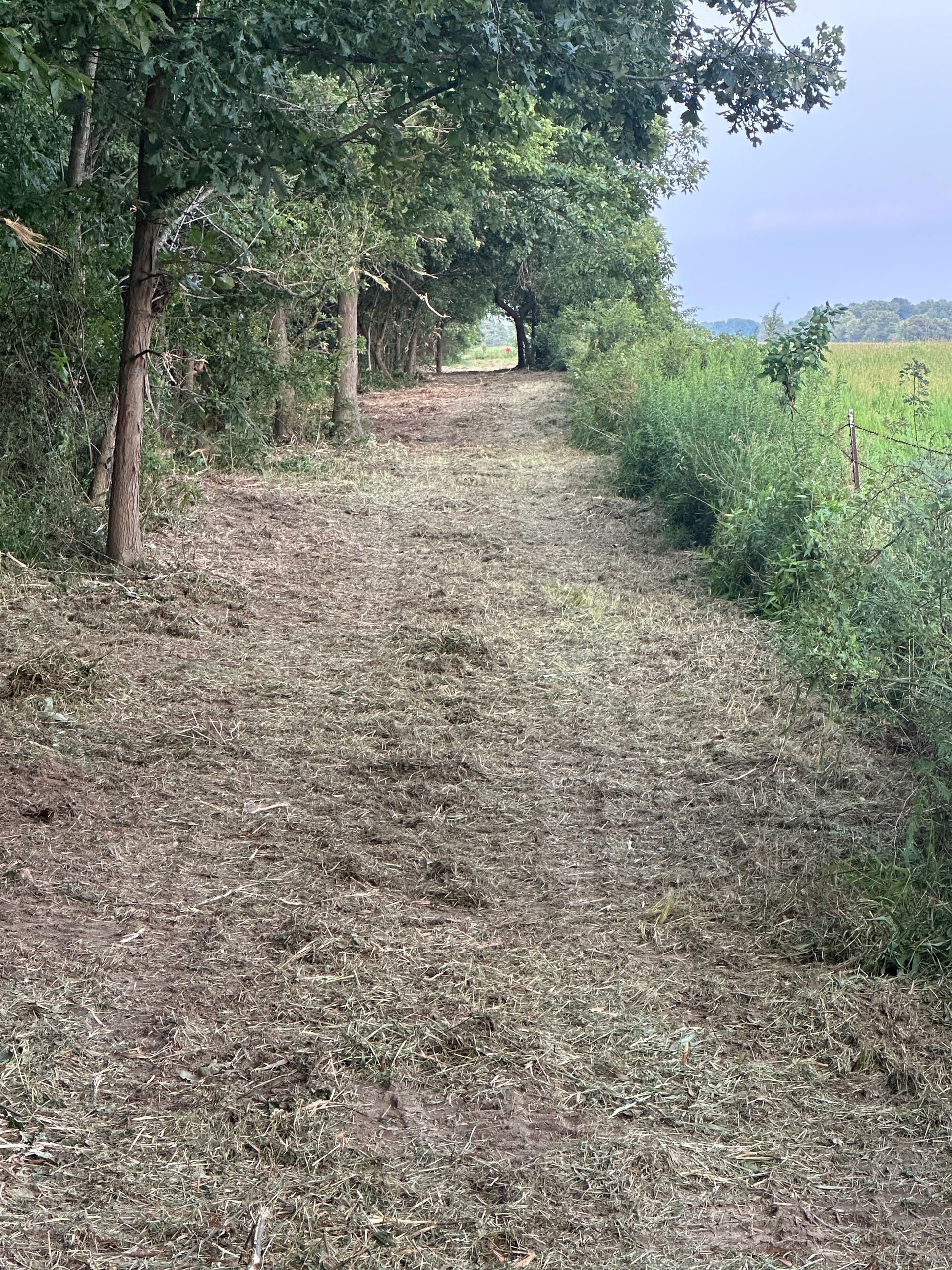
The process begins with identifying the legal boundaries of the easement or access route, then removing all woody vegetation and brush within that corridor down to ground level. Tracked equipment handles sloped or uneven terrain without tearing up the ground, which matters on properties where the right-of-way crosses ditches, follows creek banks, or cuts through wooded sections where roots stabilize soil.
After clearing finishes, utility trucks can reach infrastructure without cutting new paths, service providers won't call asking for access preparation, and you can drive equipment through without worrying about branches scraping paint or vines catching on implements. The cleared corridor also makes it easier to spot drainage problems or erosion before they turn access routes into impassable mud trenches.
This work includes vegetation removal and debris handling within the designated corridor but does not cover grading, gravel placement, or drainage improvements. If your right-of-way crosses low areas where water pools after rain, maintaining long-term access may require addressing subsurface drainage separately from clearing.
Common Questions About This Service
Landowners and property managers in Greenfield typically want to understand how the work is completed, what timing makes sense, and what changes once the right-of-way is cleared.
What documentation do I need before clearing a right-of-way?
You'll need the recorded easement boundaries from your property deed or utility agreement, which specify the corridor width and any restrictions on vegetation removal or ground disturbance within that area.
How does seasonal timing affect right-of-way access in Greenfield?
Spring rains saturate unpaved routes and make heavy equipment passage more difficult, so properties with soft soil or poor drainage often schedule clearing during drier months when ground conditions support equipment weight without rutting.
Why do some rights-of-way regrow faster than others?
Corridors that run through wooded areas or along creeks receive more seed dispersal and retain higher moisture levels, which accelerates regrowth compared to rights-of-way crossing open fields with full sun exposure and lower water retention.
What happens if the right-of-way crosses steep terrain or creek banks?
Tracked equipment maintains traction and minimizes soil disturbance on slopes and uneven ground, allowing vegetation removal without destabilizing banks or creating erosion channels that would worsen after the next heavy rain.
How wide should the cleared corridor be for utility access?
Most utility easements specify a 20- to 30-foot corridor, which provides enough room for bucket trucks and service vehicles to operate without damaging adjacent vegetation or straying outside the legal easement boundaries.
Iron Wolf Land Management clears rights-of-way for properties across Greenfield and Central Indiana where easement compliance and access reliability matter. Schedule a site review to evaluate your specific corridor conditions and clearing requirements.